Keynotes
We are delighted to announce that the esteemed speakers listed below have graciously accepted our invitation to deliver keynote speeches at the main conference of ACL 2026:
Keynote 1: Philip Resnik
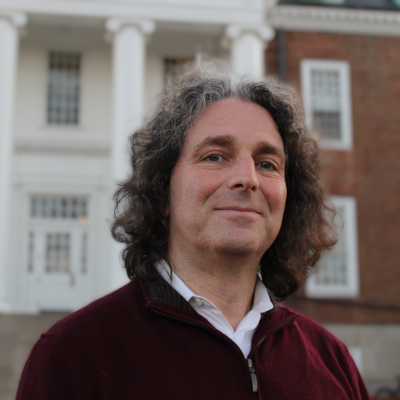
A New Balancing Act: Reflections on the Relationship between Computational Linguistics and AI
Sunday, July 5, 2026, 9:30, Harbor Ballroom Level 2
Abstract: Beginning in the mid-1980s, a “statistical revolution” in our field redefined what it meant to work on language from a computational perspective. Steve Abney, in his essay opening The Balancing Act: Combining Symbolic and Statistical Approaches to Language (Klavans and Resnik, eds., MIT Press, 1996), wrote: “In the space of the last ten years, statistical methods have gone from being virtually unknown in computational linguistics to being a fundamental given”. We are again caught up in revolutionary times. Except this time around, the revolution is hurtling forward even faster, and it is redefining not only the research we do, but what it means to do research in the first place, the role of research in society, and society itself. What does this mean for ACL – what defines us as a community, what is our role, and where do we go from here?
Bio: Philip Resnik is a Professor at the University of Maryland with joint appointments in the Department of Linguistics and the Institute for Advanced Computer Studies. In 2020 he was named an ACL Fellow for significant contributions to symbolic-statistical methods for natural language processing, multilinguality, and the interdisciplinary study of language. Philip’s most recent research has focused in three main areas. The first is computational social science, with an emphasis on qualitative analysis and connecting the signal available in people’s language use with underlying mental state. The second is the computational cognitive neuroscience of language, using computational modeling in connection with brain imaging to look at the role of context and predictive processing during online language comprehension. The third involves fundamental questions about how current AI models relate to human cognition and to human society. Outside academia, Philip’s industry experience includes research at Bolt Beranek and Newman and Sun Microsystems Laboratories, as well as an internship at IBM T.J. Watson Research Center, and in entrepreneurial life he has been a technical co-founder of CodeRyte (clinical NLP, acquired by 3M in 2012), an advisor to FiscalNote (machine learning and analytics for government relations, went public in 2022), and he currently serves as an advisor to Trustible (technology provider for responsible AI governance). Philip was an undergrad in CS at Harvard and earned his PhD in Computer and Information Science at the University of Pennsylvania.
Keynote 2: Yue Zhang

How Can AI Help Us Manage AI Conferences (where Troubles Are Caused by AI)
Monday, July 6, 2026, 1:00, Underline (Virtual)
Abstract: ACL has become 30+ times larger than two decades ago, and we face issues such as overwhelming participants, outdated papers, and low quality review. The reason can largely be attributed to increasing research in LLM, and AI accelerating research. Can AI help us address challenges in academic publication and evaluation? How can we accommodate AI-driven research? Could the research and publication paradigm be improved? In this talk, I will try to give some thoughts, sharing some of our recent work on AI review automation, paper recommendation, and AI arXiv, before briefly discussing a bit of AI research automation.
Bio: Yue Zhang is a Professor at Westlake University, and a fellow of ACL (https://frcchang.github.io). His research interests include fundamental NLP and its machine learning algorithms, and his recent research focuses on LLM reasoning and AI scientist. His major contributions to the field include machine learning algorithms for structured prediction (e.g., parsing and IE), neural NLP models (i.e., lattice and graph LSTM), and generalization for NLP/LM (e.g., OOD and logical reasoning). He co-authored the Cambridge University Press book ``Natural Language Processing – a Machine Learning Perspective’’. He served as a PC co-chair for CCL 2020, EMNLP 2022, and LMG 2025, and a general chair for AACL 2026 and NLPCC 2026. He was a co-chair for the test-of-time award committee of ACL 2024 and 2025. He serves as editor in chief for the LLM journal, action editor for TACL, and associate editor for ACM/IEEE TASLP, ACM TALLIP, and IEEE TBD.
Presidential Address: Barbara Plank
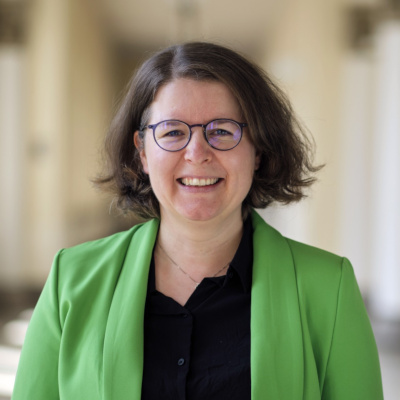
ACL 2026 Presidential Address
Monday, July 6, 2026, 15:45 Harbor Ballroom, Level 2
Bio: Barbara Plank is Professor and co-director of the Center for Information and Language Processing at LMU Munich. She holds the Chair for AI and Computational Linguistics at LMU Munich and is a visiting Professor at the Computer Science department at the IT University of Copenhagen. She directs the MaiNLP research lab (Munich AI and NLP lab) which focuses on Natural Language Processing with an emphasis on human-inspired and data-centric approaches. Her research has been funded by distinguished grants and awards, including an ERC Consolidator Grant (DIALECT) and a DFF Sapere Aude Research Leader grant. She is an ELLIS Fellow and regularly serves on international committees, including ACL and EACL, as well as on scientific advisory boards in academia and industry.
Keynote 3: Tania Lombrozo
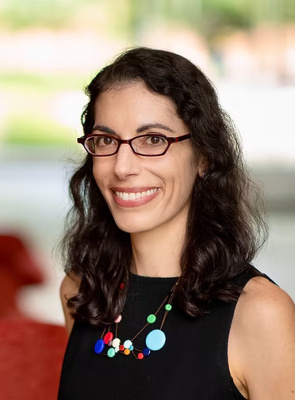
Explanation and Understanding: A Perspective from Cognitive Science
Monday, July 6, 2026, 16:45, Harbor Ballroom Level 2
Abstract: What makes some explanations more satisfying than others? Why are humans so driven to explain? In this talk I’ll take a cognitive scientific approach to explanation and understanding, drawing on decades of work in psychology, education, and philosophy to argue for a function-first approach to explanations—one on which we begin by characterizing what it is that explaining achieves. I’ll suggest that the process of explaining plays a crucial role in discovery and generalization, and that we can understand the structure and phenomenology of explanations by first appreciating how explaining drives learning and helps construct our understanding of the world. I’ll also consider some potential implications for explanation and understanding in AI systems.
Bio: Tania Lombrozo is the Arthur W. Marks ’19 Professor of Psychology at Princeton University, as well as an Associate of the Department of Philosophy and the University Center for Human Values, the director of the Program in Cognitive Science, and co-director of Natural and Artificial Minds, a research initiative within the AI Lab. She received her Ph.D. in Psychology from Harvard University in 2006 after receiving a B.S. in Symbolic Systems and a B.A. in Philosophy from Stanford University. Dr. Lombrozo’s research aims to address foundational questions about cognition using the empirical tools of cognitive psychology and the conceptual tools of analytic philosophy. Her work focuses on explanation and understanding, conceptual representation, categorization, social cognition, causal reasoning, and folk epistemology. She is the recipient of numerous early-career awards including the Stanton Prize from the Society for Philosophy and Psychology, the Spence Award from the Association for Psychological Science, a CAREER award from the National Science Foundation, and a James S. McDonnell Foundation Scholar Award in Understanding Human Cognition. Her trade book on explanation, Why We Ask Why: The Science of Explanation and the Human Drive to Understand, will be released in October.
Industry Keynote: Roberto Navigli
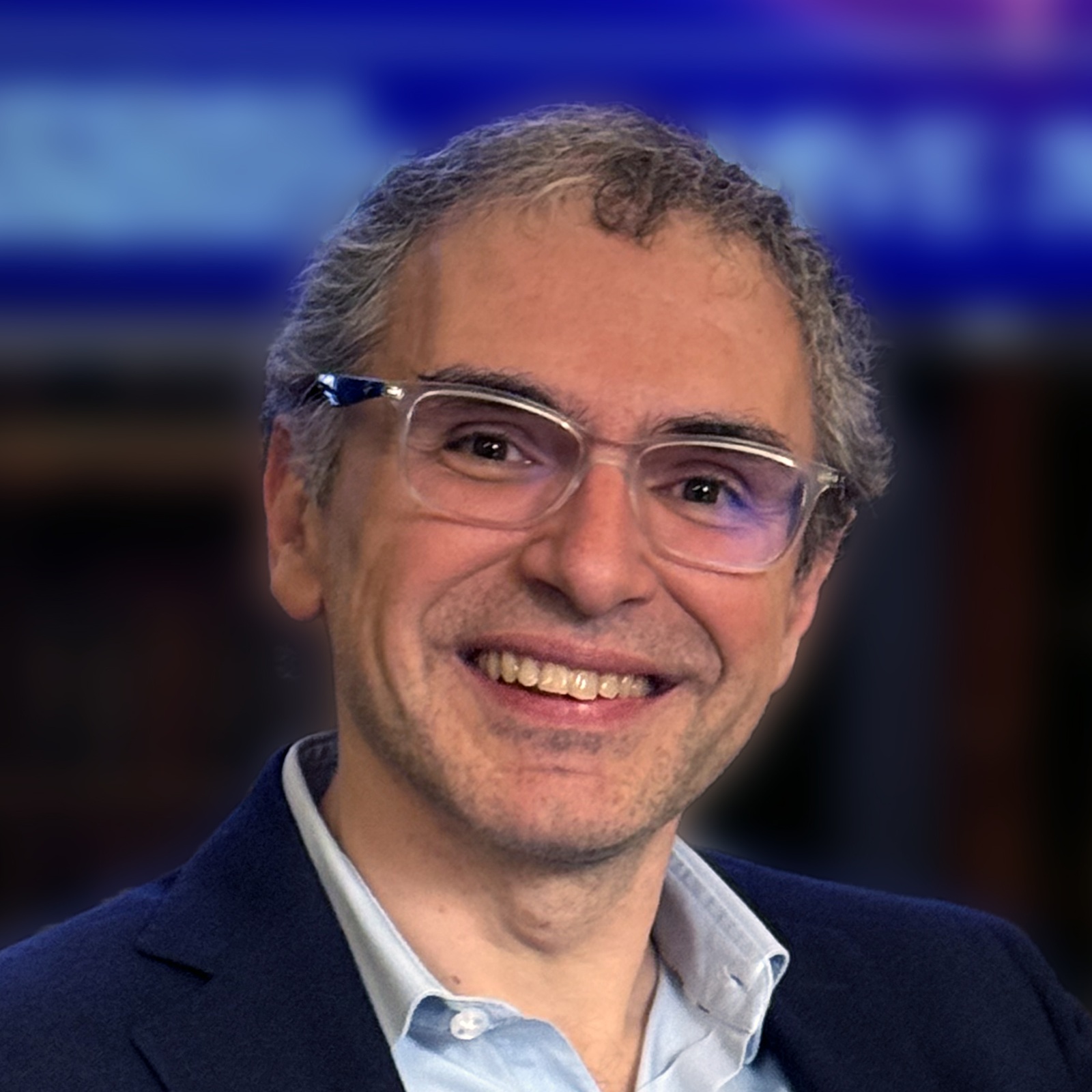
Bridging Academic and Industrial AI: Lessons from BabelNet and ChatMinerva
Sunday, July 5, 2026, 11:00–12:00
Bio: Roberto Navigli is Professor of Natural Language Processing at Sapienza University of Rome, where he leads the Sapienza NLP Group. He is a Fellow of ACL, AAAI, ELLIS, and EurAI. He has received two ERC grants on multilingual lexical and sentence-level semantics, highlighted among the 15 projects through which the ERC has transformed science, as well as several prizes and awards from leading AI and NLP journals and conferences. He is the creator of BabelNet and leads the Minerva LLM and ChatMinerva projects - the first family of LLMs and AI assistants pretrained with a focus on Italian, and among the very few initiatives of this kind in Europe. He is also Scientific Director and co-founder of Babelscape, a successful deep-tech company with ten years of experience in research-driven multilingual neuro-symbolic NLP. He is an Action Editor of TACL, served as General Chair of ACL 2025, and has served as an Associate Editor of the AI Journal.